Impact: Dignity in School

Dignity in School means children’s voices are heard

Member of Children’s Parliament, Redwell Primary School
IMPACT graphic

Impact Statement: Dignity in School

Children’s Parliament has been working with partners to build the capacity of primary schools in order to take a children’s human rights approach and become hubs of human rights practice.

By adopting a children’s human rights approach, schools help to make rights real for children by ensuring that their dignity is upheld.

From January 2023 to January 2024, we continued to develop our engagement with a focus in two local authorities, Clackmannanshire Council and Dundee Council.

This is an overview of the observed impacts in that period, for children, adults, school and local authorities.


Monitoring and Evaluation of Impact

The process is continually being reflected upon to allow full evaluation of our process. As a team, we are applying the Mosaic approach (Clark, 2014). The Mosaic approach is a framework constructed on the premise that the participants (children and adults) are the experts of their lives. The approach looks to explore the best ways of participation for the co-construction of data. Simply, the method is individual tiles of data collection brought together like a mosaic to represent broader themes or knowledge.

Utilising the Mosaic approach will be helpful to offer more comprehensive coverage of data to the analyses. The use of the approach allows creativity, which responds to the complexity of the school context (Hall and Wall, 2014, Hall 2009, Baumfield et al., 2008, Clark et al., 2011 Rinaldi, 2005).

An overview of the parts of our impact assessment alongside our organisational Monitoring and Evaluation Methods:

Debriefs

Each session to review impact on specific sessions
Team

Weekly and Termly debriefs and reflection sessions
Monthly Forum Feedback

Children and adults
Dignity Surveys and Questionnaires
Reviews (Start/Mid/End)

With school partners
Case Studies

To showcase and reflect on impact
Daily Debriefs

With the children
Dignity Matrix Review

Team and school specific versions

All impacts discussed below have been summarised from a mosaic of approaches in partnership with children, adults and the local authority. The terminology we use below includes:

All (100%)

Most (70%)

Majority (50-70%)

Some (30-50%)

Impact: Children
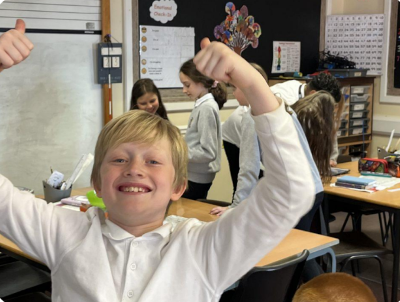
Children's Parliament, Dignity in School impact statement for children
  • all children demonstrated increased engagement in UNCRC
  • all demonstrated increased use of Language of UNCRC and vocabulary increased, and confidence in talking about UNCRC in practical ways, in majority of schools, teachers suggested this had contributed to increased attainment of children.
  • all children positively engaged in the programme demonstrated increased confidence in their Listening and Talking Skills
  • all children are excited and engaged in sharing their knowledge through peer-to-peer action in the school setting.
  • all schools offered children increased opportunities to engage in school planning
  • all schools show increase in examples of children taking ownership / leadership in their school space
  • all schools show increase in examples of children practising kindness and tolerance- demonstration of rights in action
  • some of the schools are engaging in policy changes, such as smoking consultation

View or download Case Study: Impact for Children

Impact: Adult
Children's Parliament, Dignity in School Impact statement for adults

Adults have:

  • all reported increased engagement in school.
  • all reported increased confidence (and as a by-product), majority of children less incidents of bullying-behaviour (Long-term to be reviewed).
  • all reported improved ethos in the classroom and school as dignity is understood and applied.
  • all observed improvement in language – use of language. Clarity in before and after.
  • mostly discussed reduced planning time, as children take ownership of learning.
  • all reported increased confidence and engagement in their work (themselves).
  • all reported increased engagement beyond the school – teachers have told us they feel energised by working with us.
  • all reported increased knowledge of UNCRC.
  • all noted that children’s engagement in process helped build better relationships, and was a positive process.
  • all reported that their improvement plans engaged with UNCRC; some utilised a child-friendly model engaging in planning in partnership.

View or download Case Study: Impact for Adults:

When asked, children’s ideas, demands, and suggestions are very sensible and realistic. Sharing “power dynamics” in the classroom (adults/children) doesn’t mean children are taking over but establishing a better relationship balance

Adult, Unfeartie

Impact: Schools
Children's Parliament, Dignity in School impact statement for schools

Schools have:

  • all reported active change of school improvement plan and resources across to include UNCRC.
  • majority completed child-led and community-led School Improvement Planning.
  • all engaged with CPD, enhancing the use of UNCRC in the school setting.
  • all engaged in sharing events with families and school partners. Legacy examples in majority of schools, St Mungo Language Cafe, Park Playground, Dignity Sessions.
  • all committed to continued engagement in policy changes.
  • all reported observing ethos changes across the schools, observed rights-based culture growing and present.

View or download Case Study: Impact for Schools:

Impact: Local Authorities
Children's Parliament, Dignity in School Impact statement for Local Authorities

Local Authorities have:

  • reported increased engagement in UNCRC and rights-based approaches for all new teachers.
  • noted regular engagement in sharing experiences of UNCRC across clusters and nationally through forums.
  • developed authority-wide groups to support.
  • all empowered their teachers to engage in national sharing events with partners at the Five Nations Conference.
  • all increased internal capacity, offering online sessions, in-person training, demonstration and coaching as well as our e-learning and HUB offer.
  • all celebrated and shared successes as an authority.

View or download Case Study: Impact for Local Authorities:


For more information about the Dignity in School programme,
please visit the Dignity in School Hub at dignityinschool.scot

Dignity in School is supported by Gordon Cook Foundation