
Dignity in School means children’s voices are heard
Member of Children’s Parliament, Redwell Primary School
Children’s Parliament has been working with partners to build the capacity of primary schools in order to take a children’s human rights approach and become hubs of human rights practice.
By adopting a children’s human rights approach, schools help to make rights real for children by ensuring that their dignity is upheld.
From January 2023 to January 2024, we continued to develop our engagement with a focus in two local authorities, Clackmannanshire Council and Dundee Council.
This is an overview of the observed impacts in that period, for children, adults, school and local authorities.
The process is continually being reflected upon to allow full evaluation of our process. As a team, we are applying the Mosaic approach (Clark, 2014). The Mosaic approach is a framework constructed on the premise that the participants (children and adults) are the experts of their lives. The approach looks to explore the best ways of participation for the co-construction of data. Simply, the method is individual tiles of data collection brought together like a mosaic to represent broader themes or knowledge.
Utilising the Mosaic approach will be helpful to offer more comprehensive coverage of data to the analyses. The use of the approach allows creativity, which responds to the complexity of the school context (Hall and Wall, 2014, Hall 2009, Baumfield et al., 2008, Clark et al., 2011 Rinaldi, 2005).
An overview of the parts of our impact assessment alongside our organisational Monitoring and Evaluation Methods:
| Debriefs Each session to review impact on specific sessions | Team Weekly and Termly debriefs and reflection sessions | Monthly Forum Feedback Children and adults | Dignity Surveys and Questionnaires |
| Reviews (Start/Mid/End) With school partners | Case Studies To showcase and reflect on impact | Daily Debriefs With the children | Dignity Matrix Review Team and school specific versions |
All impacts discussed below have been summarised from a mosaic of approaches in partnership with children, adults and the local authority. The terminology we use below includes:

All (100%)

Most (70%)

Majority (50-70%)

Some (30-50%)

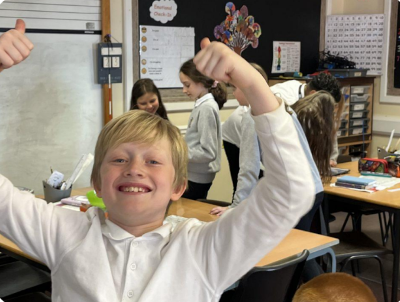
View or download Case Study: Impact for Children

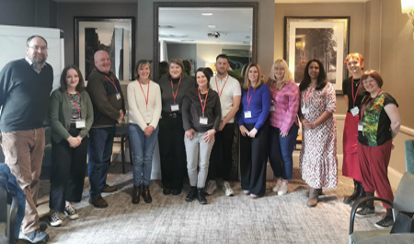
Adults have:
View or download Case Study: Impact for Adults:
When asked, children’s ideas, demands, and suggestions are very sensible and realistic. Sharing “power dynamics” in the classroom (adults/children) doesn’t mean children are taking over but establishing a better relationship balance
Adult, Unfeartie

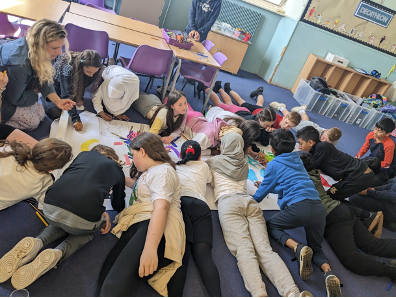
Schools have:
View or download Case Study: Impact for Schools:

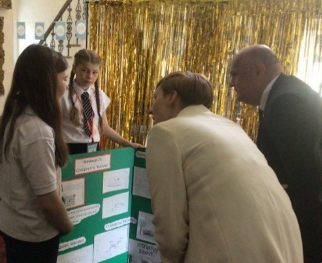
Local Authorities have:
View or download Case Study: Impact for Local Authorities:
For more information about the Dignity in School programme,
please visit the Dignity in School Hub at dignityinschool.scot
Dignity in School is supported by Gordon Cook Foundation